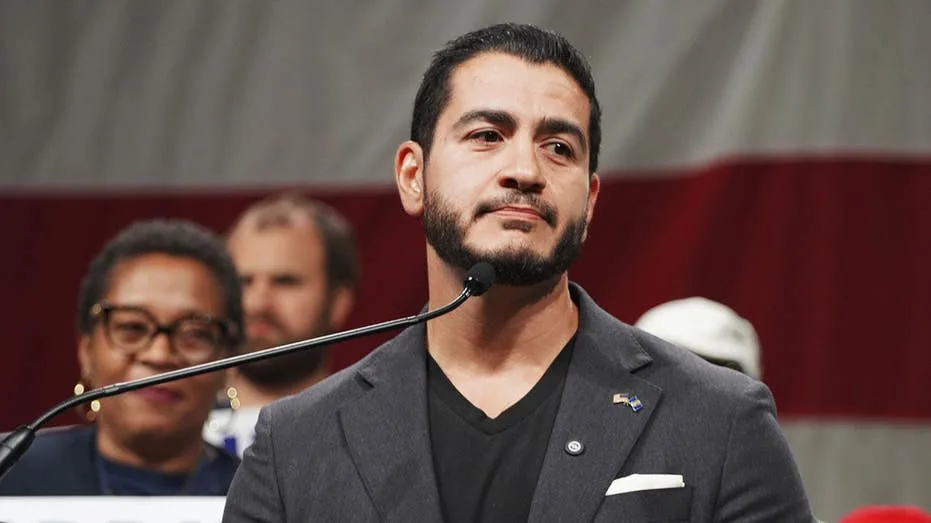
Michigan Democratic Senate candidate Abdul El-Sayed recently faced questions regarding his campaign's financial backing, specifically concerning contributions from billionaire Democratic donor George Soros. This discussion arose as El-Sayed has been a vocal critic of his Republican opponent, Mike Rogers, for accepting corporate funding, advocating for a reduction of money in politics.
During a recent interview, El-Sayed emphasized a "big difference" between the two types of donations. He stated that while he welcomes financial support from individuals who wish to contribute to his campaign, he actively avoids soliciting funds from corporations or groups like AIPAC. "When individuals want to give to my campaign, I welcome their support," he explained, distinguishing this from corporate involvement.
The Soros family's extensive political network has channeled millions into various political action committees that are actively supporting El-Sayed's bid for the Senate. Despite these substantial individual contributions, El-Sayed maintains his stance that "corporations shouldn’t buy politicians." He consistently argues that receiving support from affluent individual donors differs fundamentally from seeking or accepting corporate money.
Distinguishing Between Donor Types
El-Sayed elaborated on his distinction, asserting that when politicians accept corporate funds, they become "in a position to govern on their issues," potentially leading to biased decisions. He cited examples such as turning a "blind eye" to certain problems or voting repeatedly to "keep prescription drug prices high" as consequences of corporate influence.
The anchor, Martha MacCallum, further pressed him on the approximately $30 million committed by the Senate Majority PAC to aid his election efforts. She inquired about the source of these funds, suggesting they often originate from corporations. The question posed was whether such donors would later expect political favors in Washington, implying that "those interests, those people are going to circle back around to you in Washington and say, 'So, senator, we gave this much money…’"
The Michigan Democrat firmly rejected this notion, insisting that the organizations supporting his candidacy "won’t" seek votes in return. He affirmed his clear position: "They won't, because I've been very, very clear that I am not interested in doing the bidding of corporations. I will not sit down with a corporate lobbyist."
Advocating for Corporate Money Reform
El-Sayed reiterated his commitment to reducing corporate influence, stating, "We need to get the corporations out, and right now, corporations are buying politicians at a record clip." He highlighted how lobbyists often sway lawmakers' decisions, diverting their focus from the needs of their constituents.
He pointed out that the issue transcends party lines, observing, "In my primary and in the general election, the same corporations are funding politicians. And this is the problem." He added, "Both sides of the aisle funded by exactly the same corporation – that's what I want to end."
El-Sayed concluded by emphasizing his core objective: "I don't think they should be able to buy any of us. And that's exactly what I want to end. So, when I say money out of politics, I intend fully to get corporate money out politics."
These statements precede an anticipated campaign appearance by former President Barack Obama, who is expected to join El-Sayed on the campaign trail in Michigan later this month as Democrats make their final push ahead of the midterm elections.