Archbishop Fulton Sheen's Enduring Message: Faith, Morality, and Warnings Still Resonate Today
Decades after captivating millions on television, the recently beatified Archbishop Sheen's teachings continue to spark contemporary discussion.
Politics·
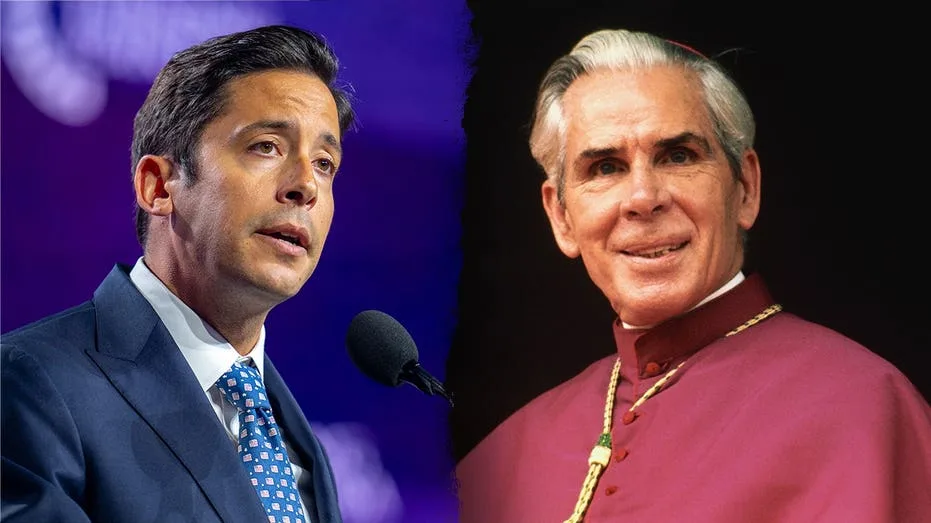
Archbishop Fulton Sheen captivated millions of Americans through his television broadcasts, utilizing little more than a chalkboard, a clerical cape, and a compelling message centered on Christianity, moral principles, and the dangers of communism. More than seven decades later, conservative commentator Michael Knowles suggests that if the renowned Catholic broadcaster were to deliver a similar message today, he would likely be immediately labeled a “far-right extremist.”
Sheen received formal beatification, a significant step toward possible sainthood within the Roman Catholic Church, during a ceremony in St. Louis. This recognition solidifies his place as one of the 20th century's most prominent religious figures in America. President Donald Trump and First Lady Melania Trump joined Catholic adherents in commemorating Sheen's life, with the White House highlighting him as the first American-born bishop to be beatified by the Church.
A Pioneering Voice in Media
Long before digital platforms like podcasts and social media offered religious leaders direct access to vast audiences, Sheen emerged as one of the nation's most successful religious broadcasters. His radio program, “The Catholic Hour,” reportedly reached over 4 million listeners, according to Vatican News. He later transitioned to television, where his show, “Life Is Worth Living,” ultimately garnered an estimated 30 million viewers. The program's format was remarkably straightforward.
Dressed in his ecclesiastical vestments and standing before a chalkboard, Sheen addressed viewers directly, discussing themes of faith, morality, suffering, and human dignity, skillfully interweaving theological concepts with personal anecdotes and humor. “He was the very first televangelist,” Knowles observed, contending that Sheen possessed an innate understanding of mass communication principles that remain relevant in the contemporary digital era. “He went where the people were.”
Sheen's influence extended far beyond conventional religious circles. The White House also noted his weekly ratings competition with entertainment icons Milton Berle and Frank Sinatra, his appearance on the cover of Time magazine, and his Emmy Award for outstanding television personality. Among the millions who encountered Sheen's televised evangelization was a young boy who would later become Pope Francis. Decades after his early exposure to Sheen's work, Pope Francis approved Sheen's beatification in St. Louis.
Contemporary Relevance and Cultural Commentary
Knowles expressed confidence that Sheen would likely have embraced podcasts, social media, and other contemporary communication platforms with similar zeal. However, Knowles contended that the substance of the message delivered through these platforms could place Sheen in direct opposition to certain aspects of modern American culture. When questioned about what would most quickly lead to the bishop being “canceled” in a hypothetical 2026 scenario—his Catholicism, his anti-communism, or his unwavering defense of both—Knowles asserted that these elements were inextricably linked.
“His absolutely unapologetic apologetics,” Knowles stated.
Knowles further argued that Sheen's adherence to traditional Catholic teachings regarding sex, marriage, and human nature would likely attract particularly intense scrutiny today. “They would have tried to cancel him,” Knowles remarked, adding that Sheen would ultimately have “the last laugh in heaven.”
Sheen's vocal opposition to communism was a cornerstone of his public ministry, a point underscored by the White House during the beatification observances. The presidential message characterized Sheen as someone who brought Christian doctrine to a world “threatened by the titanic forces of communism.” The White House also recalled Sheen's warnings in the 1960s about what he perceived as a destructive societal impulse sweeping across America.
“Our Nation is too full of those that are crying, ‘Down,'” Sheen reportedly said in remarks shared by the White House, before enumerating institutions such as schools, churches, teachers, government, and police. “Can you build anything down?” he famously asked.
Knowles suggested that Sheen's warnings endure because the fundamental debate concerning human nature persists in modern times. He connected the recurring allure of communist and utopian political movements to the Christian concept of original sin, positing that political systems falter when they are founded upon a flawed understanding of human nature. “When their policies are implemented, they fail,” Knowles affirmed.
Path to Beatification and Legacy
Nevertheless, Sheen's journey to beatification did not ultimately hinge on his television ratings or political commentary, but rather on the Catholic Church's evaluation of his devout life and a miracle attributed to his intercession. His cause for sainthood was initiated in Peoria, Illinois, in 2002. The miracle accepted for Sheen's beatification involved a child born in 2010 who exhibited no heartbeat or respiration, according to an account published by Vatican News. After 61 minutes, the child miraculously revived and eventually made a full recovery. Pope Francis officially approved this miracle in 2019, removing a significant obstacle on Sheen's path toward beatification. The Catholic Church's recognition of Sheen was not merely presented as a celebration of his media celebrity.
Cardinal Luis Antonio Tagle, who represented Pope Francis at the beatification Mass, emphasized Sheen's profound relationship with Christ and his missionary endeavors over his public renown. In an apostolic letter read during the ceremony, Pope Francis described Sheen as an evangelist who effectively utilized modern communication tools to spread the Gospel.
Sheen's ties to the modern papacy extend back even further. He participated in the Second Vatican Council, where, according to a Vatican News biography, he encountered two clerics who would later become popes: Archbishop Karol Wojtyla, who became Pope John Paul II, and Father Joseph Ratzinger, who became Pope Benedict XVI. Shortly before Sheen's passing, his path intersected with John Paul II's once more. During the pope's 1979 visit to New York, a physically frail Sheen approached John Paul at St. Patrick's Cathedral and attempted to kneel. John Paul gently lifted him and embraced him, as per the Vatican's account.
“You have written and spoken well of the Lord Jesus Christ,” John Paul told him. “You are a loyal son of the Church.”
Sheen died two months later, on December 9, 1979.
Beyond the Platform: Sheen's Enduring Appeal
For Knowles, Sheen's remarkable ability to attract an immense audience was not solely a result of his theological depth or the novelty of television. “He took life seriously, he just didn't take himself seriously,” Knowles explained. This unique combination, Knowles argued, enabled Sheen to address profound subjects without becoming overly solemn, thereby making complex religious and philosophical arguments accessible to a wide audience far beyond practicing Catholics.
People might initially discover Sheen through his anti-communism, his cultural traditionalism, or even, as Knowles quipped, an appreciation for formal attire among those weary of seeing “sweatpants at the airport.” Yet, beneath his television celebrity and political commentary lay a dedicated priest who maintained a daily Holy Hour before the Eucharist throughout his ministry—a practice Sheen referred to as “the hour that makes my day,” according to his Vatican News biography. While admiring Sheen is commendable, Knowles suggested, emulating his example is a more significant endeavor.
“It would be far better for you and for all of us to follow his example,” Knowles concluded.
Related Stories
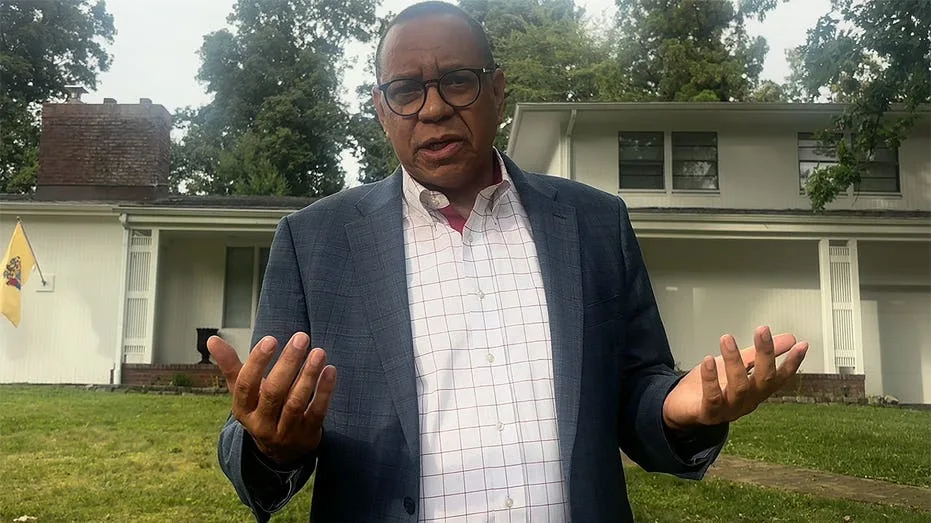
Former New Jersey Lt. Gov. Dale Caldwell Addresses Resignation, Challenges Ethics Probe Findings
Former New Jersey Lt. Gov. Dale Caldwell has spoken out for the first time since his resignation, disputing the ethics report that led to his departure. He maintains he stepped down to avoid being a distraction for Gov.
Sep 26
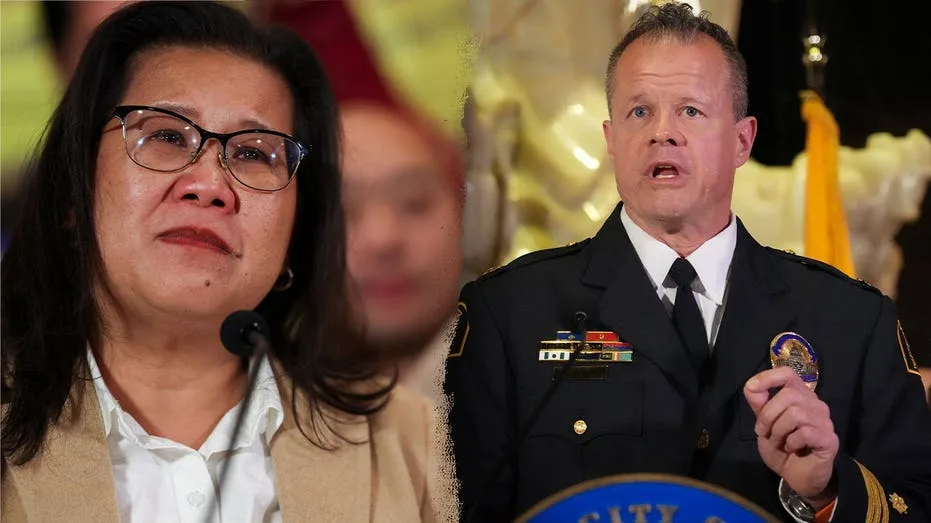
St. Paul Police Chief Files Lawsuit Against Mayor, Alleges Sexual Harassment and Retaliation
St. Paul Police Chief Axel Henry is suing Mayor Kaohly Her, alleging a pattern of sexual harassment, including explicit remarks and unwanted physical contact. The lawsuit also claims retaliation occurred after Henry
Sep 25

Supreme Court Directs Missouri to Retain 2022 Congressional Map for 2026 Election
The Supreme Court mandated Missouri use its 2022 congressional map for the 2026 election, blocking a newer 2025 version. This decision resolves immediate legal challenges over district boundaries, ensuring the existing
Sep 25
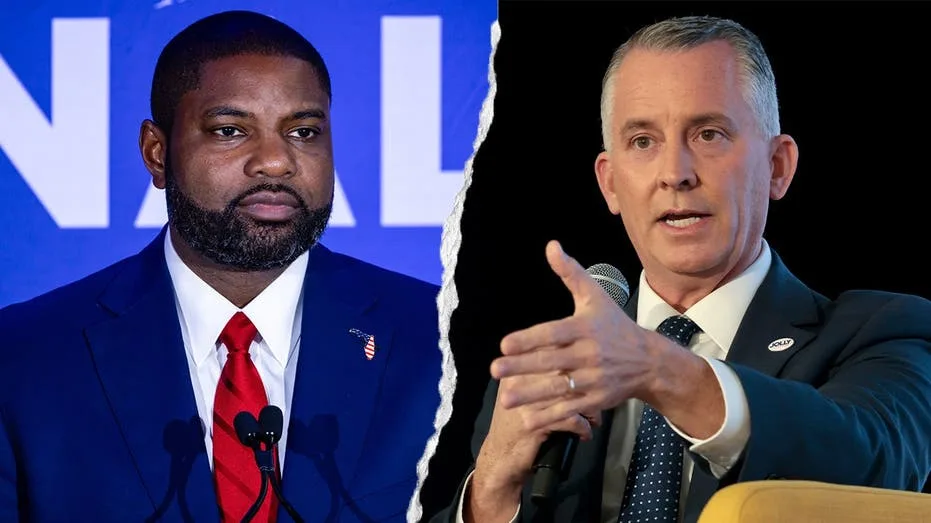
Donalds Highlights Opponent's Shifting Stances in Tightening Florida Gubernatorial Contest
Florida gubernatorial candidate Byron Donalds is challenging opponent David Jolly over his changing political stances on issues like abortion, immigration, and healthcare. Donalds suggests these shifts indicate
Sep 25