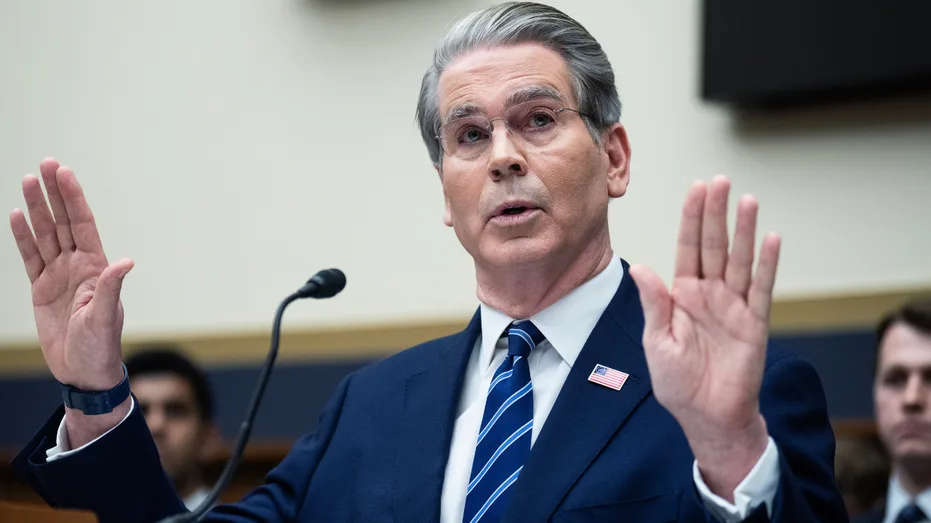
A senior Treasury official confirmed an extension of the economic understanding between the United States and China, known as the Busan agreement, through early next year. The accord, initially set to conclude on November 10, will now remain in effect until January 10, providing additional time for economic discussions between the two nations.
Extended Economic Dialogue with China
The official, who engaged in multi-day discussions with China's Vice Premier He Lifeng this week, emphasized the importance of continuing economic dialogue. The extension aims to explore further avenues for economic cooperation and stability between the global powers.
Intensified Pressure on Iran
As the conflict involving the United States and Iran approaches its seventh month, the Treasury official elaborated on three potential scenarios for its resolution. These include an internal fracturing within the Iranian regime, a popular uprising among the Iranian populace, or Tehran's eventual decision to engage in substantive negotiations to reach an agreement.
The Treasury Department continues its comprehensive economic pressure campaign against Iran, targeting the nation's assets and financial networks. This extensive effort also involves compelling foreign governments and businesses to sever their economic ties with Tehran, a strategy the official characterized as unprecedented globally.
"We have an effort never seen before in terms of constricting and cutting off the financial oxygen to them," the Treasury chief stated. "And I don't know whether it's gonna be a week, a month or two months, but they're going to yell uncle."
In August, the Treasury Department initiated Operation Economic Outcast, an expansion of its existing economic strangulation efforts. This operation is designed to further sever Iran’s financial lifelines that sustain the regime and to deepen Tehran’s isolation from the international financial system.
The official issued a stern warning to entities globally that continue to engage financially with Iran. "We have made it very clear around the world, whether it's the financiers, the people who are doing business, the people who are supplying the Iranians, we know who you are, you know who you are, and we are going to prosecute and execute your companies and your bank accounts every day and every week," the official cautioned.
Addressing the logistical challenges faced by Iranian officials, the Treasury chief expressed uncertainty regarding how representatives attending the United Nations General Assembly would return home, citing significant restrictions imposed on Iranian airlines.
US-China Discussions on AI Safety
Separately, the Treasury official dismissed recent speculation suggesting he was a leading candidate for a hypothetical AI czar position within a potential future administration. Instead, the focus was on the recent discussions with Chinese Vice Premier He Lifeng concerning artificial intelligence.
During these talks, the official put forward a proposal for an AI "notification mechanism" between the United States and China. This system would enable both countries to inform each other about AI-related safety incidents that could potentially pose national security risks.
"They're very eager to engage with us on AI because… the U.S. is substantially in the lead, China's behind us," the official observed.
The official underscored the critical importance of this engagement. "It's very important for us to engage on this," he reiterated. He also noted that efforts are underway to collaboratively define what are considered the most significant or perilous risk factors, including the potential for uncontrolled AI agents or the use of AI by non-state actors for cyber operations or biological threats.