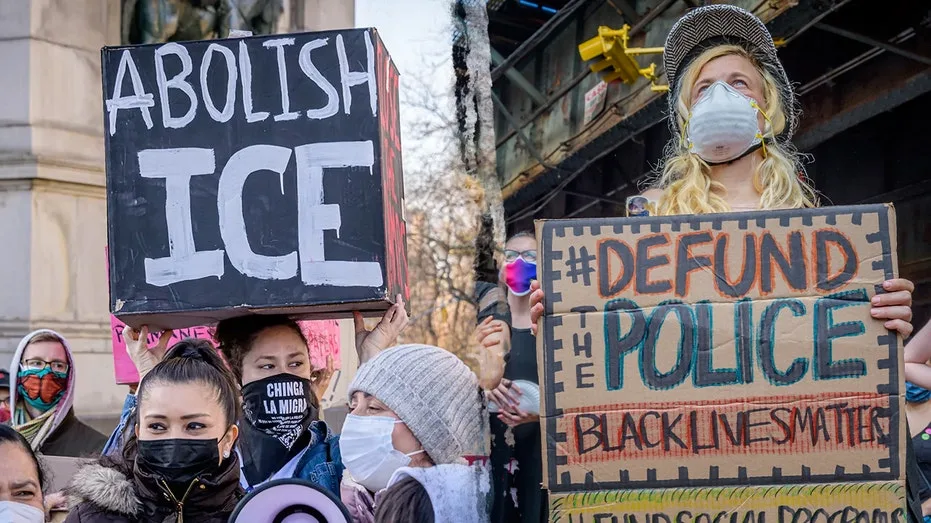
The phrase "Woke 1 was crazy," recently employed by New York Representative Alexandria Ocasio-Cortez, who attributed it to New York City Councilman Chi Ossé, serves as a descriptor for the political climate of 2020. This label offers a convenient method for Democrats to categorize certain progressive concepts, such as defunding law enforcement and advocating for prison abolition, as relics of the past. The implication is a clear demarcation: "that was then; this is now." This strategic separation bears a resemblance to the psychological concept of compartmentalization.
In everyday life, compartmentalization often manifests as the ability to keep disparate aspects of one's existence distinct, thereby avoiding internal conflict. For instance, an individual might maintain a family life and a separate extramarital relationship, managing to keep these two realities sufficiently apart to sidestep the inherent contradictions. This psychological mechanism enables the isolation of conflicting elements within our lives, rather than requiring their reconciliation.
This approach seems to be precisely what the Democratic Party is attempting with its recent past. One might observe the Democratic Party of 2020, characterized by a sudden surge in influence for progressive ideas previously considered outside the mainstream. This contrasts sharply with the projected Democratic Party of 2026, which emphasizes themes like affordability, economic populism, and efforts to re-engage voters alienated by the cultural politics of recent years. The designation "Woke 1" effectively draws a clean line between these two eras. True intellectual evolution necessitates confronting prior convictions, a step that compartmentalization bypasses.
During 2020, numerous political viewpoints evolved into litmus tests of character. These beliefs transcended mere policy stances; they became indicators of an individual's core identity. Should perspectives that were dismissed six years ago now prove to hold merit, it implies a need to re-evaluate more than just specific policies. It might suggest an overconfidence in one's own positions or a misinterpretation of differing opinions as prejudice.
Alternatively, one can simply categorize the entire period as "Woke 1."
The Unacknowledged Agency of 2020
However, the events of 2020 were not simply an external phenomenon that befell the Democratic Party. Instead, political figures actively championed certain ideas, activists vigorously promoted them, and various institutions determined which arguments would receive attention and which would be marginalized. Individuals who dared to challenge the dominant narratives sometimes faced significant repercussions. Labeling this entire period as "Woke 1" risks portraying these deliberate choices as mere consequences of an anomalous phase that the party has collectively moved beyond.
Should Democratic leaders now disavow stances they either adopted or condoned in 2020, the electorate is justified in anticipating a clear explanation. A central inquiry arises: did the party's convictions genuinely shift, or did they merely recognize a change in voter sentiment?
It is not inherently dishonorable to alter one's perspective. Authentic change, however, necessitates drawing a connection between past beliefs and current convictions, alongside an admission of where errors were made. Absent such an honest self-assessment, voters are left to speculate whether the motivations for change stemmed from evolving principles or shifting political expediency.
While the Democratic Party may choose to compartmentalize its 2020 platform, the voting public is under no obligation to do the same.
The Persistence of Past Stances
A political candidate might view a position held six years ago as ancient history; however, an adversary can easily resurrect it through archival interviews, campaign questionnaires, or social media archives. The assertion "that was then" often elicits the straightforward retort: "Yes, but that was still you."
This tendency is not exclusive to Democrats; every political party invariably seeks methods to distance itself from stances that become politically disadvantageous. Yet, 2020 presents a distinct challenge because a significant number of political convictions became inextricably linked to moral identity. Consequently, abandoning a particular position can feel less like conceding a policy error and more like making a personal admission about one's character.
A potential path forward exists. The Democratic Party could acknowledge that while 2020 effectively highlighted legitimate societal issues, it also generated some flawed proposals. They could concede that certain rhetoric became excessive and that individuals who questioned the dominant consensus were, at times, unfairly treated. Such an admission would not necessitate forsaking concerns about systemic racism, police misconduct, or inequality. Instead, it would require recognizing that even deeply held moral convictions can, at times, be mistaken.
The perennial debate within the Democratic Party often revolves around whether its strategic direction should lean further left or gravitate toward the center. The "Woke 1" phenomenon, however, introduces a more compelling question: before charting a future course, can Democrats articulate their current perspective on their recent past?
While the statement "Woke 1 was crazy" might carry the cadence of a confession, it ultimately falls short. A true confession explicitly identifies errors made. Compartmentalization, by contrast, merely relegates those errors to a mental space where they can be conveniently ignored.