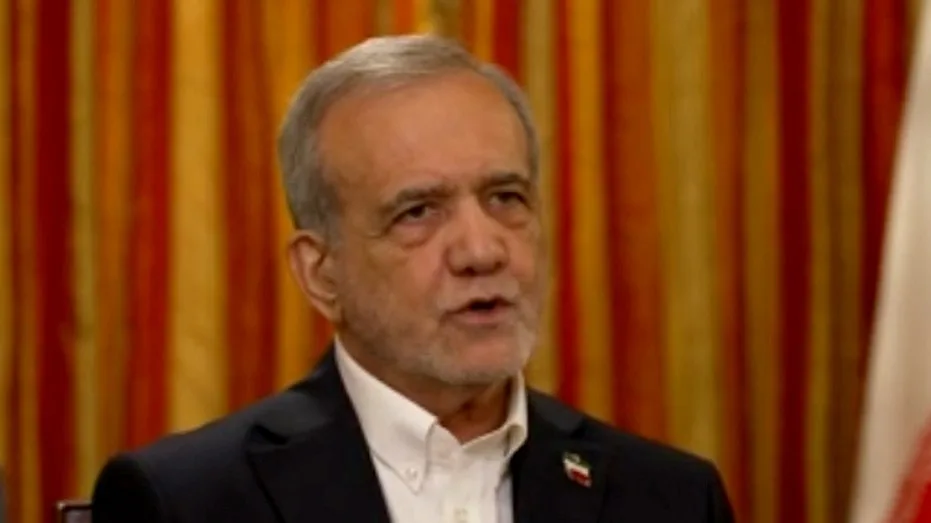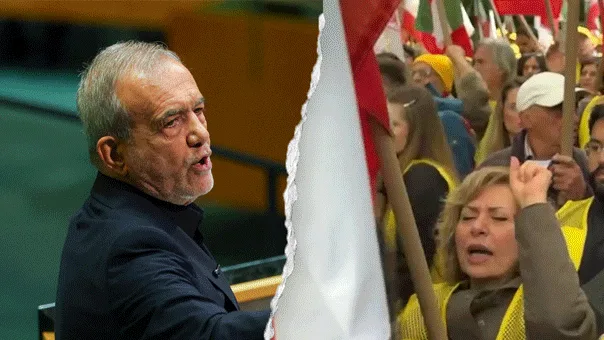
UNITED NATIONS, N.Y. — As Iranian President Masoud Pezeshkian presented his nation as a victim of American and Israeli aggression during his address to the United Nations General Assembly, a different narrative unfolded just outside the building.
Several thousand demonstrators convened, asserting that President Pezeshkian should face arrest, labeling him a terrorist. The crowd's chants echoed forcefully, repeatedly declaring, “They are terrorists. They must go!” Waving green, white, and red flags symbolizing the resistance movement, the protesters voiced their strong opposition.
Calls for Regime Change and International Action
Among the speakers at the gathering was former New York City Mayor Rudy Giuliani, who sharply criticized the Iranian leader. “The president of Iran speaks and lies over and over again. He is a murderer. He is a terrorist,” Giuliani stated. He further characterized the regime, asserting, “It is useless to negotiate with them because they are terrorists, murderers, possibly in some ways insane religious maniacs. This would be like trying to reach an agreement with Hitler.”
A chorus of former high-ranking government officials echoed this sentiment, condemning what they described as a radical Islamic regime responsible for decades of severe oppression and violence against the Iranian populace. Reports indicate that approximately 20,000 protesters who participated in freedom demonstrations in Iran earlier this year have been killed by the government, with weekly reports of political prisoner executions continuing to emerge.
Retired Lt. General Keith Kellogg, who served in two Trump administrations, addressed the assembly with a clear message: “It is time now to free Iran from the mullahs.” He outlined a vision for the nation’s future, stating, “You have a road map to a secular, non-nuclear Republic of Iran, one that rejoins the free world as a friend.”
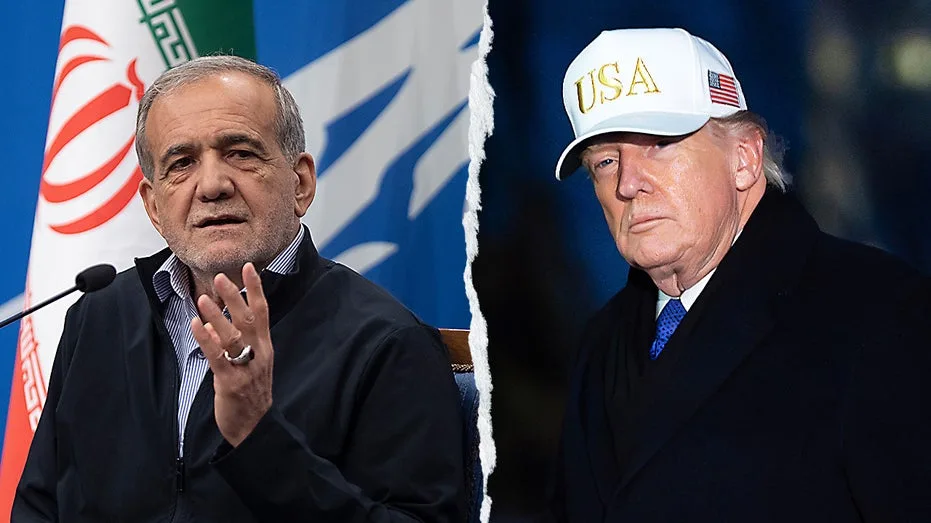
Former U.S. Ambassador Marc Ginsberg urged congressional action, advocating for the passage of the Maximum Support Act. This proposed legislation aims to restrict Iran’s financial resources, seize government assets, and promote internet freedom within Iran, thereby empowering its citizens to organize and express themselves. Ginsberg directly appealed to a former president, saying, “All you have to do, President Trump, is to provide the funding and the support that we need, the tools the Iranian people need. That is the type of help you promised. That is the type of help you can still provide and bring the United States closer to this exit ramp from this war and to accelerate our speed as Iran’s arsenal of democracy.”
Visions for a Future Iran
Maryam Rajavi, president-elect of the National Council of Resistance of Iran—the organization behind the protest—delivered a video message to the rally. She affirmed that “the people of Iran have rejected every form of dictatorship, whether religious or monarchical.” Rajavi emphasized the significance of the ongoing dissent, stating, “The voice of protest from Iran’s oppressed people is being heard. The voice rejects the continued occupation of Iran’s seat by religious fanatics,” referencing the current regime’s membership in the international body.
The rally spanned two days, maintaining a consistent message for diplomats at the United Nations. Speakers stressed that the current Iranian regime is “incapable of reform and change. If they were able, they would have done it a long time ago.” The overarching sentiment was that “the real solution for Iran is change by the people of Iran. They can have any talks, any concessions, none of that is going to change the behavior of the regime.”
A concluding statement from the protest underscored the central theme: “The real Iran is represented by the people of Iran. The real change has to come from within.”