Lindsay Clancy Enters Evidence Agreement, Forensic Testimony Reveals No Usable Fingerprints in Duxbury Case
A Massachusetts mother accused of killing her three children agreed to a forensic evidence stipulation, while a state trooper testified no usable fingerprints were found on key items, shaping the trial's focus on her mental state.
U.S.·
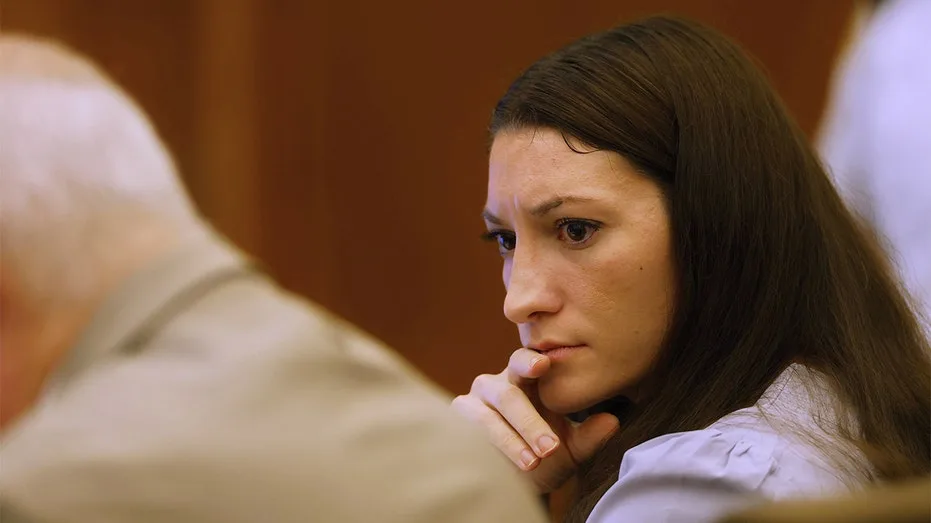
Lindsay Clancy, facing charges related to the deaths of her three children, appeared in court Tuesday and repeatedly affirmed, "Yes, Your Honor," as she accepted an agreement allowing prosecutors to consider specific forensic details as undisputed. This development occurred just hours before a state police trooper informed the court that investigators were unable to recover any usable fingerprints from a knife or three exercise bands found at the scene.
These proceedings have sharpened the focus of the Massachusetts murder trial, directing it toward the central question of whether Clancy possessed criminal responsibility when her children were killed inside their Duxbury residence.
Court Proceedings and Evidence Stipulation
Before the jury entered, Judge William Sullivan questioned Clancy about a stipulation covering certain pieces of evidence. "You understand that by signing the stipulation, you’re agreeing that the Commonwealth does not have to prove these certain facts that are contained in the stipulation," Judge Sullivan inquired. "Do you understand that?"
Clancy responded, "Yes, Your Honor."
When asked if she had been compelled or threatened into accepting the agreement, Clancy stated, "No, Your Honor."
Judge Sullivan concluded that Clancy was competent and had entered the stipulation "knowingly, intelligently, voluntarily and willingly."
Defense attorney Kevin Reddington explained that this agreement would preclude prosecutors from needing to call numerous witnesses solely to establish the chain of custody for blood, bodily fluids, exercise bands, and DNA evidence. Reddington stated, "We have not been contesting the government’s case in chief, if you will."
It is important to note that the stipulation does not constitute a guilty plea, nor is it an admission by Clancy of criminal responsibility for the deaths of Cora, 5, Dawson, 3, and Callan, 8 months.
Margaret McLean, a former criminal prosecutor and trial attorney who now teaches law at Boston College’s Carroll School of Management, commented on the strategic implications of the agreement. She noted that it enables the defense to redirect the jury's attention away from repetitive forensic testimony and toward Clancy’s mental state at the time of the incident.
McLean also cautioned that Clancy’s composed responses during Tuesday’s hearing should not be interpreted as indicative of her mental condition on January 24, 2023. "She sounded rational. She understands what she’s doing," McLean observed. "But remember, the Commonwealth’s burden of proof is to prove that she was sane beyond a reasonable doubt at the time the crimes were committed -- not today, not two weeks ago."
Forensic Testimony on Fingerprint Evidence
Later in the proceedings, Massachusetts State Police Trooper Jonathan O’Loughlin provided testimony regarding his examination of a knife and three exercise bands recovered from the Duxbury home.
Trooper O’Loughlin indicated that while the knife did show an area with a friction-ridge impression, investigators were unable to use it for identification purposes. He explained, "There was not enough characteristics or minutia to do any comparison," concluding that the impression had "no value."
Similarly, the yellow, black, and blue exercise bands did not yield any impressions suitable for comparative analysis. Defense attorney Reddington directly asked, "The bottom line is that you didn’t get any fingerprints?" O’Loughlin confirmed, "Correct."
O’Loughlin elaborated that fingerprints are "very, very, very fragile" and can be compromised by factors such as an object’s texture, environmental conditions, movement, the amount of grip strength applied, or if a surface has been wiped clean.
McLean suggested that the absence of identifiable prints could prompt jurors to consider whether gloves were used or if the items were intentionally wiped, potentially leading them to view the missing prints as evidence of premeditation. However, she noted that the defense could counter this by reminding jurors not to "speculate on something that’s not in evidence."
"They can use their common sense when they go to the table and they deliberate," McLean stated, "but they can’t speculate [about] things that are not in the evidence."
Related Stories

Man Pleads Guilty to 2023 Murder of Lauren Heike on Phoenix Hiking Trail
Zion Teasley pleaded guilty to the 2023 murder of Lauren Heike, accepting a life sentence without parole. Prosecutors withdrew the death penalty. Heike was found with 15 stab wounds; DNA and surveillance linked Teasley
Oct 7
Denver Kidnapping Plot Uncovered: Tren de Aragua Ties Lead to Torture, Ransom Demands, and 20-Year Sentences
A Denver man endured days of torture and a severed finger in a kidnapping plot orchestrated by the Tren de Aragua gang. Three perpetrators were sentenced to 20 years in federal prison, while authorities continue efforts
Oct 7

Nobu Malibu Chef Dies After Teen Driver Crashes into His Parked Car
Ryo Uchimiya, a long-serving sushi chef at Nobu Malibu, tragically died after a collision involving a teenage driver. The incident occurred while Uchimiya was sleeping in his parked car, highlighting ongoing safety
Oct 6

Luxury Fashion Designers Found Dead in Berkeley; Family Details Troubling Lead-Up to Tragedy
The co-founders of the Bryn Walker luxury fashion brand, Michelle Min and Barry Walker, were found fatally shot in Berkeley. Relatives described a "troubling decline" in Walker, citing significant financial losses and
Oct 5