Supreme Court Rejects Trump's Birthright Citizenship Order, Justice Kavanaugh Lays Out Congressional Path
While the Supreme Court affirmed the rejection of an executive order to limit birthright citizenship, one justice's concurring opinion suggested a legislative avenue for Congress to pursue similar changes.
Politics·
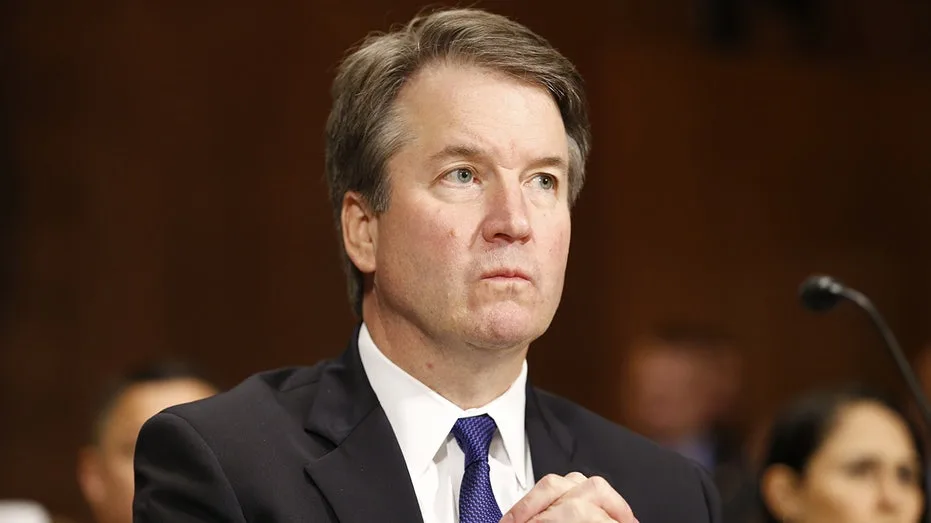
An executive order by former President Donald Trump, intended to curb birthright citizenship, was recently rejected by the Supreme Court. However, a concurring opinion from one of his own judicial appointees may have provided congressional Republicans with a potential framework for achieving many of the same objectives through legislative action.
Justice Brett Kavanaugh, voting with the 6-3 majority, agreed that Executive Order 14160, which sought to limit automatic citizenship to individuals born to U.S. citizens or permanent residents, could not be implemented. Yet, in his separate opinion, he outlined an alternative approach. Kavanaugh contended that the Court should have resolved the matter based on federal law rather than the Constitution, thereby suggesting a legislative pathway for Congress to modify birthright citizenship.
Justice Kavanaugh's Legislative Framework
The language regarding birthright citizenship, derived from the Fourteenth Amendment, was first incorporated into federal law by Congress in 1940 and subsequently carried over into the Immigration and Nationality Act of 1952.
Kavanaugh noted that because Congress adopted this language after the Supreme Court's pivotal 1898 decision in United States v. Wong Kim Ark — a ruling that established automatic U.S. citizenship for most individuals born in the country — lawmakers effectively codified the Court's interpretation into federal statute.
Kavanaugh asserted that the president could not unilaterally alter a law already enacted by Congress through an executive order. Instead, he proposed that Congress could revise the existing law to restrict birthright citizenship for children born to parents who are either in the country without authorization or on a temporary basis.
“Congress could — consistent with the Fourteenth Amendment—amend §1401(a) or otherwise enact new legislation establishing exceptions to birthright citizenship for children born to foreign citizens unlawfully or temporarily in the country,” he wrote.
Kavanaugh further argued that the significant scale of unauthorized immigration and the realities of modern international travel have created circumstances unforeseen by the Reconstruction Congress. In his view, this grants Congress the latitude to establish new exceptions to birthright citizenship, which he suggested could be comparable to historical exceptions recognized under the Citizenship Clause, such as children born to foreign diplomats or enemy forces occupying U.S. territory.
“Those two categories of foreign citizens—namely, those unlawfully or temporarily in the country—are relevantly similar to the four categories of persons recognized as exceptions in Wong Kim Ark,” Kavanaugh wrote.
Divergent Republican Responses
While the majority of the Court did not endorse Kavanaugh's constitutional interpretation, Republicans swiftly embraced the notion that any future attempts to limit birthright citizenship would need to originate in Congress, not the executive branch.
Hours following the Supreme Court's announcement, House Speaker Mike Johnson remarked that birthright citizenship has
Related Stories
Federal Judge Halts Trump-Era Fines Up to $1.8 Million for Migrants
A federal judge has issued a preliminary injunction against Trump administration fines for migrants who failed to leave the U.S. after deportation orders. The ruling cited violations of federal law and potential
Oct 7
Dennis Hastert, Longest-Serving Republican House Speaker and Convicted Child Molester, Dies at 84
Former House Speaker Dennis Hastert has died at 84. His political career, marked by an unexpected rise to power as the longest-serving Republican Speaker, was later overshadowed by a federal conviction for concealing
Oct 6
Trump Clears Path for Fort Hood Shooter Nidal Hasan to Face Army Firing Squad After Nearly 17 Years
President Donald Trump has authorized the execution of Fort Hood shooter Nidal Malik Hasan by military firing squad. This decision, announced by a Pentagon spokesperson, comes nearly 17 years after Hasan killed 13 and
Oct 6

Black Voter Turnout Emerges as Decisive Factor in Texas Senate Race to Challenge Republican Dominance
In the closely watched Texas Senate contest, Democratic candidate James Talarico's chances against Republican Ken Paxton hinge significantly on Black voter participation. This election could potentially end the GOP's
Oct 4