Tennessee Death Row Inmate Critically Ill After Failed Execution, Attorneys Allege Ignored Warnings
Legal counsel for Christa Pike, unconscious and on a ventilator following a lethal injection attempt, asserts state prison authorities disregarded months of warnings regarding execution complications.
U.S.·
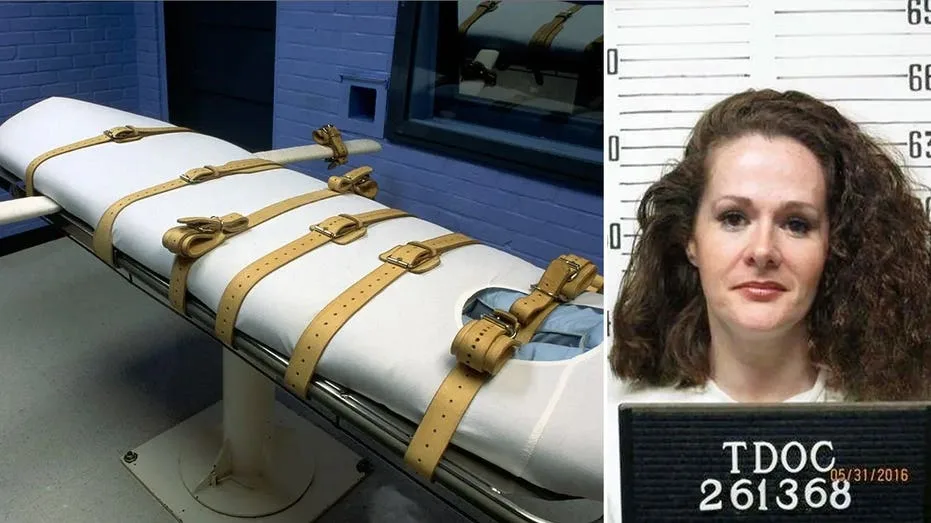
A Tennessee death row inmate remains unconscious and on a ventilator following the state's unsuccessful execution attempt this week. Her legal team has accused prison officials of overlooking months of prior alerts that the lethal injection procedure could go catastrophically wrong.
Christa Pike had been scheduled for execution due to her involvement in the 1995 torture killing of 19-year-old Colleen Slemmer. Had the execution on Wednesday night proceeded as planned, Pike would have been the first woman executed in Tennessee in over two centuries.
Emergency Motion Filed for Evidence Preservation
Pike's attorneys promptly filed an emergency motion in Davidson County Chancery Court. They are seeking a court order to compel the Tennessee Department of Correction (TDOC) to safeguard all evidence related to what they characterize as the state's "botched attempted execution."
The legal team contends that these records are crucial for uncovering the full details of what transpired, safeguarding Pike's constitutional rights, and ensuring accountability for the events.
"Christa remains critically ill and is receiving medical care for the devastating effects of Wednesday night's events," attorneys Stephen Ferrell and Luke Ihnen stated on Friday. "As detailed in today's filing, Christa remains hospitalized following Wednesday night's failed execution attempt."
"She is critically ill, unconscious, intubated and receiving breathing assistance through a ventilator," they added. "She is being treated for the serious effects of the pentobarbital administered during the execution attempt, including significant injuries to both arms."
The emergency motion provides a significantly more detailed account of the events that Pike's attorneys claim unfolded within the execution chamber.
Allegations of Execution Team Struggles
According to Pike's legal team, the execution crew encountered considerable difficulty establishing intravenous access, reportedly employing at least seven needles before administering two lethal doses of pentobarbital.
The court filing further alleges that Pike herself offered suggestions regarding potential IV insertion sites. It also claims that one needle was discovered bent at a 90-degree angle upon its removal, and that Pike could be heard crying, whimpering, and breathing heavily throughout the procedure.
Pike reportedly told the execution staff, "My arm feels like it's about to burst open," and later inquired, "Does this happen like that?"
The motion states that Pike arrived at the hospital with both of her arms described as "swollen, burned, and blistered." Medical experts, cited in the filing, have compared pentobarbital to caustic substances like "bleach" or "Drano," noting its capacity to burn skin, tissue, and veins.
Warnings Reportedly Ignored by State Officials
Pike's attorneys argue that none of these complications should have been unforeseen. Months prior to the scheduled execution, they had explicitly warned the state that Pike's medical conditions—including thrombocytosis, post-traumatic stress disorder, small veins, and a history of difficult needle insertions—made it highly probable that prison staff would struggle to establish and maintain IV access.
They also cautioned that an improper delivery of pentobarbital could lead to "serious illness, needless suffering, and/or prolonged or lingering death."
"Her concerns were called 'speculation'; they were laughed off, scoffed at, and dismissed," the motion asserts. "In the words of one media witness: we have a lot of questions and the Department of Correction has a lot of answers that it needs to provide to the public about what happened here. We agree."
The attorneys further contend that the execution team failed to recognize that Pike's IV lines had failed before proceeding to administer a subsequent dose of pentobarbital.
"Apparently at no point did any member of the execution team realize that the IV lines were not correctly placed or that the veins had blown and that the pentobarbital was, in whole or in part, entering Ms. Pike's body," the motion states. "Instead of remedying this failure, TDOC elected to prepare a backup set of syringes (if they were not also prepared earlier that day) and then administered another lethal dose of pentobarbital."
As the case progresses, Pike's legal representatives emphasize the critical importance of preserving all evidence from the attempted execution.
"In light of the manifest violation of Ms. Pike's constitutional rights, the actionable nature of that violation, and the reasonable foreseeability of litigation, the Defendants have an affirmative duty to preserve all relevant physical, written, and electronic evidence," the motion concludes.
A spokesperson for the attorney general's office acknowledged the situation, stating, "The governor has appropriately called for an investigation. We need to know what happened."
Related Stories

U.S. College Campuses Grapple with Diverse Controversies, From Free Speech Debates to Legal Challenges
Colleges and universities across the United States are navigating a complex landscape of disputes, including controversial campus speakers, faculty conduct issues, religious freedom lawsuits, and emerging financial
Oct 3
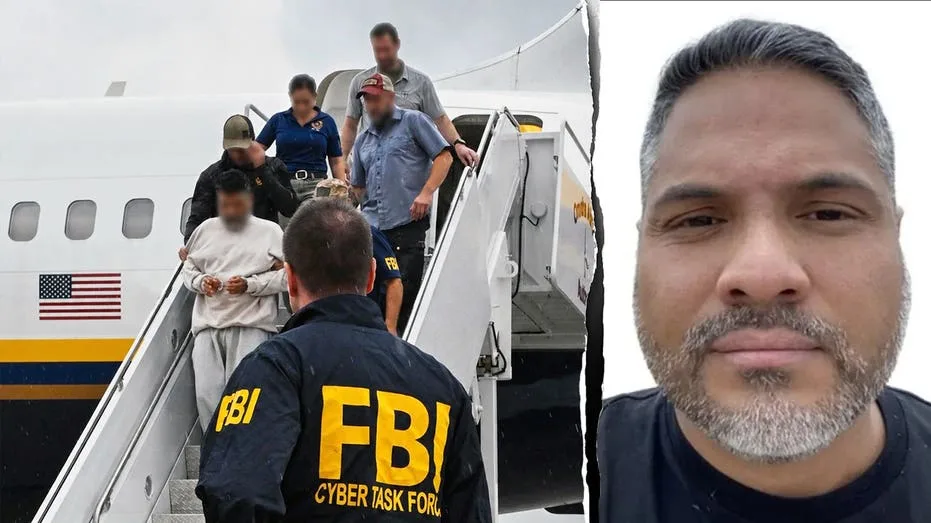
FBI's First Cyber Fugitive on Most Wanted List Returns to U.S. After Capture in Venezuela
Anibal Alexander Canelon Aguirre, the first cyber fugitive on the FBI's Ten Most Wanted list, has been returned to the U.S. following his capture in Venezuela. He appeared in a Nebraska courtroom to face federal charges
Oct 3

Cornell Sexual Assault Allegations Spark National Controversy, Prompt State Criminal Investigation
A sexual assault case at Cornell University, involving allegations against seven former fraternity brothers, has become a national flashpoint. Conflicting accounts and prosecutorial decisions are under scrutiny, leading
Oct 2

Lawyers Urge Tennessee Governor to Commute Christa Pike's Sentence Following Botched Execution
Attorneys and death penalty experts are urging Tennessee Governor Bill Lee to commute Christa Pike's death sentence. Pike survived two doses of lethal injection drugs, an event described as unprecedented, and is now
Oct 2