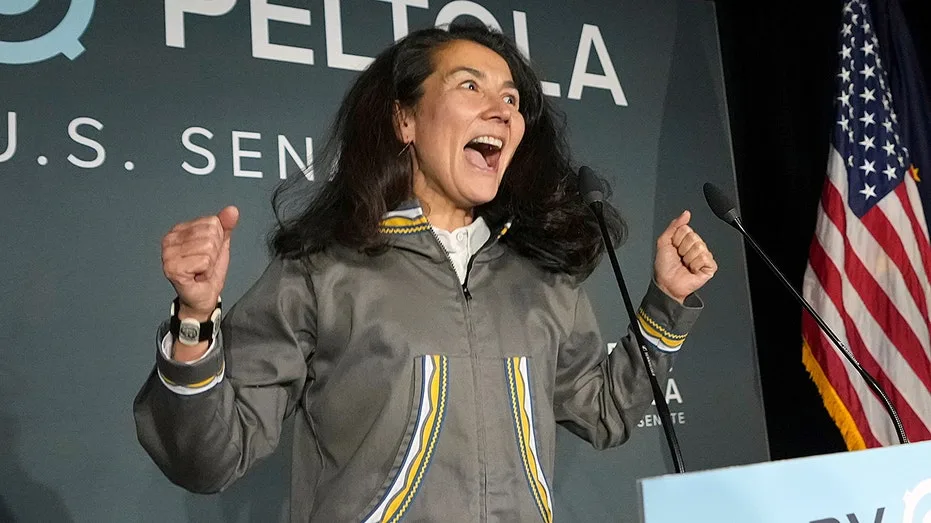
Democrats have successfully flipped a Republican-held Senate seat in the 2026 midterm elections, with former Democratic Representative Mary Peltola defeating two-term Republican Senator Dan S. Sullivan in Alaska. This outcome establishes a 56-44 majority for Democrats in the U.S. Senate.
The contest in Alaska emerged as one of the most closely watched Senate races nationally, presenting a rare opportunity for Democrats to gain ground in a state that former President Donald Trump carried by approximately 13 percentage points in 2024. Republicans were defending a seat in traditionally conservative territory.
Allegations of Candidate Recruitment Scheme
The campaign grew increasingly controversial just days before Election Day when The New York Times reported on a secret initiative allegedly involving Peltola campaign aides, attorneys, and national Democratic operatives. This effort reportedly aimed to recruit a candidate who shared the Republican incumbent's name.
According to the Times, text messages and interviews revealed a broader scheme, internally referred to as the "ballot composition project." Its objective was reportedly to enlist candidates who could draw votes away from Senator Sullivan. The report indicated involvement from the Democratic Senatorial Campaign Committee (DSCC) and included discussions about forming a new right-wing political party.
Both Peltola's campaign and the DSCC issued denials of any participation in or knowledge of such recruitment efforts. In response to these revelations, Republican Governor Michael Dunleavy ordered an investigation to determine whether the alleged recruitment operation violated Alaska state law.
Reflecting the unusual competitiveness of the race in a state typically favoring Republicans in federal elections, The Cook Political Report had rated the contest as a toss-up.
Key Figures and Campaign Dynamics
Mary Peltola, a former state legislator, made history in 2022 by becoming the first Alaska Native to be elected to Congress. She won a special election to fill the seat left vacant by the passing of Republican Representative Don Young.
In that initial contest, she defeated former Republican Governor Sarah Palin, and subsequently secured a full term later that year. Peltola later lost her 2024 reelection bid to Republican Nick Begich III, which then paved the way for her Senate campaign.
Senator Dan S. Sullivan, a Marine Corps veteran and former Alaska attorney general, first won his Senate seat in 2014 by unseating Democratic incumbent Mark Begich, who is Nick Begich III's uncle. He was reelected in 2020 and sought a third term, campaigning on his extensive experience, focus on national security, and commitment to Alaska's energy interests.
The Ballot Controversy and Ranked-Choice Voting
The 2026 race also featured an unusual ballot controversy involving Dan J. Sullivan, a retired teacher whose name was nearly identical to that of the Republican incumbent. Alaska election officials initially moved to remove the second Sullivan from the ballot amid accusations that his candidacy was intended to confuse voters or siphon support from Senator Sullivan. However, the candidate denied any wrongdoing, and the Alaska Supreme Court ultimately ruled that he could remain on the ballot. In October, the Department of Justice filed a lawsuit to mitigate any potentially "misleading" impact of the newcomer's presence on the ballot.
This controversy added another layer of complexity to Alaska's ranked-choice voting system, which enables voters to rank candidates in order of their preference.
Under this system, a candidate who receives a majority of first-choice votes wins outright. If no candidate reaches this threshold, the lowest-performing candidate is eliminated, and their ballots are then redistributed according to the voters' next available preferences until a winner is determined.
Peltola had previously benefited from this ranked-choice tabulation process during her 2022 congressional victories, where it helped decide the outcomes of races featuring multiple Republican contenders.
The Alaska contest held significant national importance as both major parties vied for control of the U.S. Senate, with the outcome directly impacting the partisan balance of the chamber.