A complex and emotionally charged situation at Cornell University, which first emerged two years ago, has now garnered national attention, fueling extensive discussions about consent, drug use, and accountability within collegiate social environments.
Central to the controversy is a lawsuit accusing seven former members of the Chi Phi fraternity of drugging and sexually assaulting a female Cornell student. The alleged incident occurred during a night of drinking, drug use, and group sexual activity at their fraternity house in October 2024.
The plaintiff, identified in legal documents as Jane Doe, claims the men sexually assaulted her after she arrived at the house already intoxicated and was subsequently pressured into consuming ketamine and other substances. The accused individuals have denied the allegations, with some asserting that any sexual acts were consensual, while others deny their involvement altogether. No criminal charges have been filed against the seven men to date.
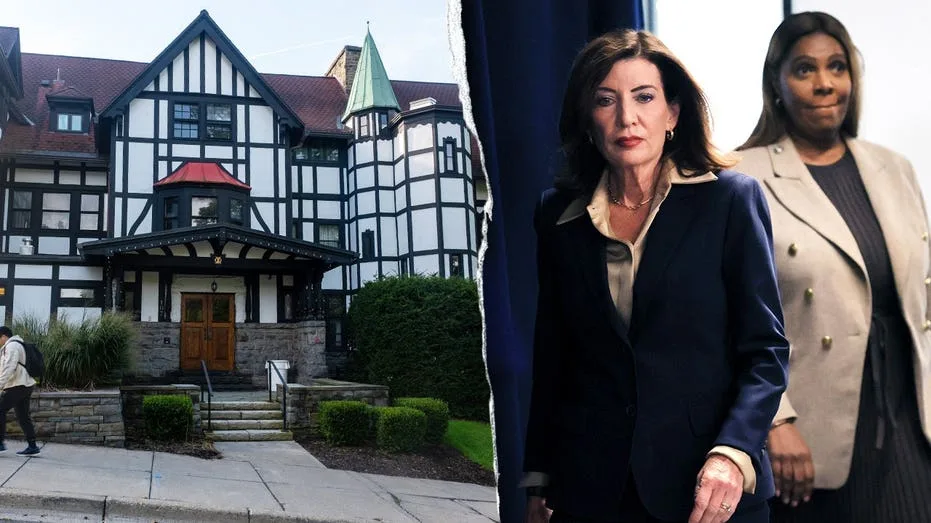
The case has recently intensified into a significant political and legal saga. New York Attorney General Letitia James announced on a Friday that her office is conducting an "active criminal investigation," following Governor Kathy Hochul's appointment of the Attorney General's Office as special prosecutor. Separately, Cornell University has committed to engaging independent counsel to conduct a review of how the institution managed these allegations.
At the heart of the ongoing dispute are starkly different accounts of the events that transpired that night. These discrepancies include variations between Doe's statements in the weeks immediately following the incident, the information prosecutors say they received from Cornell police, and the detailed allegations presented in the lawsuit filed nearly two years later.
Conflicting Narratives and Initial Decisions
Tompkins County District Attorney Matthew Van Houten, who initially decided not to pursue charges, stated that Doe's sworn statement from November 2024 did not claim she was drugged against her will or subjected to gang rape. Instead, he maintained that her statement described her participation in drug use and sexual conduct as "voluntary, conscious, and consensual."
Jane Doe was a 20-year-old undergraduate student at Cornell when the events in question unfolded on the evening of October 19, 2024.
According to her civil complaint, Doe began her evening consuming vodka at her Tri Delta sorority house before attending a social event at an Ithaca bar. She later visited a second bar, departing alone around 11 p.m. to walk to the Chi Phi fraternity house, where she intended to meet a friend who was a member.
Upon her arrival at the Chi Phi house, Doe was visibly intoxicated, having reportedly consumed approximately 10 standard alcoholic drinks over a three-hour period, as detailed in her own legal filing.
Once inside, Doe alleges, a fraternity member offered her another beer before suggesting a threesome involving another brother. The lawsuit contends that Doe was already too inebriated to provide consent.
Doe further claims she was then escorted upstairs, where two fraternity members coerced her into snorting what they identified as ketamine, a substance she states she had never previously used. She alleges they also provided her with marijuana and high-proof liquor before engaging in sexual acts with her without her consent.
The lawsuit states that additional fraternity members entered the room as the night progressed. At 1:42 a.m., a screenshot included in the complaint shows one member posted "free p----" in a Snapchat group chat for active Chi Phi members. The complaint asserts this message was an invitation for other members to go upstairs.
Information emerged on a Friday that additional Snapchat messages from the fraternity group had been obtained, including a photograph of Doe with another man that was shared with dozens of Chi Phi members that night. Shortly before this photo was posted, one participant reportedly wrote, "Like you can walk in and whip it out," while another later inquired, "Shop still open?" and received the response, "Yeah."
Attorneys representing several of the accused men have denied any criminal wrongdoing by their clients. One attorney told a news outlet that the lawsuit was "intentionally dishonest" and affirmed that while his client engaged in immature and inappropriate Snapchat messages, he committed no crime. Another attorney stated that the public account was "incomplete" and inconsistent with evidence gathered during Cornell's internal investigation, including Doe's own statements.
Doe alleges she became progressively impaired and eventually "completely incapacitated" as the encounters continued. The complaint states the final alleged assault concluded around 5:45 a.m., at which point Doe lost consciousness.
Evolving Perceptions and Initial Reactions
Contemporaneous text messages, interviews, and university records indicate that Doe described different aspects of the encounter with varying details in the days and weeks following the incident, while also expressing significant distress.
When she returned to her sorority house at approximately 11:15 a.m. on October 20, university records from Cornell's Title IX proceedings show Doe informed her roommates that she had taken ketamine and engaged in sexual activity with multiple men. One roommate recalled that Doe did not initially characterize the events as rape or sexual assault, while another noted she appeared "in shock" and seemed to struggle with the gravity of her own recounting.
The following day, one of the men Doe would later accuse apologized to her via text message for how the night had unfolded. He expressed regret that he and another fraternity member had been too intoxicated to intervene before things got "way out of hand."
Doe's reply indicated that "none of the sexual stuff was illegal" and that she had enjoyed being with the two men.
However, other evidence from the same period suggests Doe was already struggling with the experience. On October 22, she visited Cornell Health to seek treatment for a urinary tract infection and testing for sexually transmitted diseases, informing a physician that she had contracted the infection "in a traumatic way," according to university records.
Doe's distress reportedly escalated as information about the encounter circulated on campus. A roommate told Cornell investigators that Doe initially described it as a "crazy thing that she had done," but her understanding shifted over subsequent days. The roommate recounted discussing parts of the encounter with Doe and informing her that some of what she described could be considered rape.
Approximately one week after the incident, Doe discovered an anonymous online post alleging that Chi Phi members had been "gang banging" and that a sophomore had been gang raped. Doe later told Cornell investigators that seeing this post was a turning point in how she perceived the night.
"That's the first time I had ever heard the narrative change that I wasn't a whore and that I was assaulted," she stated, according to university records.
Despite this, Doe reportedly maintained contact with fraternity members and initially planned to attend Chi Phi's Halloween party. After being initially welcomed, the fraternity's president later uninvited her, leading Doe to accuse the men of "covering your asses."
By November 3, Doe explicitly began describing most of the encounter as nonconsensual. In a text message, she wrote that "90% of what happened that night was not consensual," adding that she had been given more ketamine than she could recall and felt uneasy around unfamiliar individuals. Four days later, she visited an Ithaca emergency room to request a rape kit.
Police Investigation and Prosecutorial Review
Doe was interviewed by Cornell University Police on November 14 and 15. A transcript of these interviews revealed that she differentiated the initial sexual encounter, which she said she had been "pretty OK with," from subsequent events later in the night.
"I can say with 100% confidence I was raped," Doe told investigators, according to the transcript. She further described later sexual activity as coercive and stated she had been "completely and totally incapacitated."
During these interviews, the campus police investigator prepared a six-page written statement that Doe reviewed and signed. District Attorney Van Houten stated that his office received this document—rather than the complete interview transcript—before making the decision not to pursue criminal charges.
According to Van Houten's interpretation of the signed statement, Doe indicated she agreed to the initial threesome due to attraction and "drunken curiousness," was "pretty ok" with it, and voluntarily consumed ketamine later in the night.
The district attorney explained that multiple prosecutors and investigators reviewed the signed statement, accepted Doe's account as true, and concluded that the facts presented did not constitute a crime under New York law. Van Houten emphasized that her credibility was "never in question."
When the full transcript was recently presented to Van Houten, he stated it had never been provided to him.
"That wasn't information that I had," he commented, adding later that its existence "changes the landscape for me."
For nearly two years following the alleged incident, no criminal charges were brought against any of the men.
The Lawsuit and State Intervention
The case garnered national media attention on September 16, when Doe filed a comprehensive 101-page lawsuit in New York Supreme Court, detailing her allegations about the events inside the Chi Phi house.
The lawsuit accuses the seven former fraternity members of sexual assault and rape, seeking compensatory and punitive damages. However, its scope extends beyond the individual men.
Doe's complaint also names Cornell University, the Chi Phi fraternity and its associated entities, her own Tri Delta sorority, and Moonies Bar & Nightclub, among others. She alleges that these institutions failed in their duty to protect her before, during, and after the events of that night.
The complaint asserts that Doe was already intoxicated from drinking at the Tri Delta house before a sorority housemother accompanied her to Moonies. There, the lawsuit claims, a bouncer marked both of the then-20-year-old's hands with an "X" to signify she was under 21, yet she was still served alcohol.
The graphic nature of the allegations immediately raised questions about the lack of prosecution in 2024. District Attorney Van Houten stated he first learned of the lawsuit on September 18, two days after its filing. He reported that his office subsequently received a deluge of calls and emails, including threats, demanding answers.
Van Houten publicly defended his initial decision while also reopening the investigation. He met with Doe and her legal representatives and announced plans to present the matter to a Tompkins County grand jury, allowing it to consider her testimony and any new evidence emerging from the lawsuit.
The controversy intensified after information revealed that Van Houten had never received the complete transcript of Doe's November 2024 interview with Cornell University Police. Van Houten suggested that if relevant information was omitted from the signed statement provided to prosecutors, an investigation into those circumstances should be conducted by an entity independent of Cornell.
Cornell has independently agreed to secure outside counsel to conduct a review of the university's handling of the allegations, as confirmed by Governor Hochul. This review is distinct from the criminal investigation now being led by Attorney General James' office.
Cornell, through its own disciplinary processes, reached specific conclusions. University President Michael Kotlikoff stated that two of the accused students were expelled, two received suspensions for a minimum of two semesters, one had graduated before disciplinary action could be implemented, and two were found not responsible for sexual misconduct.
These university findings were the result of Cornell's disciplinary process, which operates separately from the criminal justice system and adheres to different standards and procedures.
Cornell has refuted claims that it imposed only minor consequences, asserting that its Title IX process led to expulsions and suspensions. The university denied that any student was offered the opportunity to write essays as the sole punishment for their involvement, labeling suggestions of inadequate punishment as "false."
The case has also drawn renewed scrutiny to Cornell's campus environment. A 2025 university survey indicated that over 35% of female undergraduates who responded reported experiencing nonconsensual sexual contact involving force, threats, or incapacitation—an increase from 23% in 2023. Cornell noted that 926 out of 6,000 invited students participated in the survey, representing an approximate 15% response rate.
Governor Kathy Hochul formally intervened on a Thursday, signing an executive order to appoint the Office of the Attorney General as special prosecutor in the matter.
Attorney General James affirmed that her office would conduct an investigation guided by "the facts and the law."