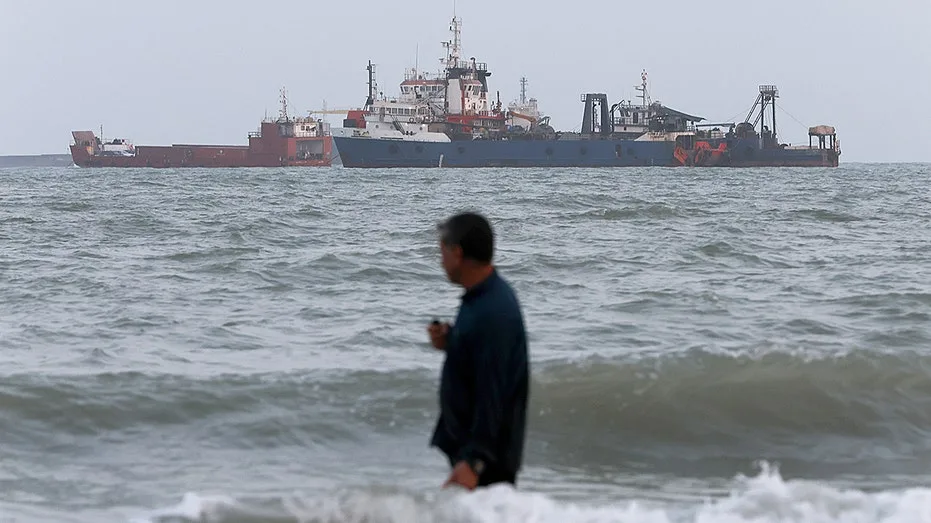
President Donald Trump recently announced that the United States had successfully eliminated or detonated all mines within international waters of the Strait of Hormuz. Now, the commander of U.S. Central Command (CENTCOM) has provided the most comprehensive public account to date of the critical operation that led to this declaration: a multi-month endeavor where American forces covertly cleared Iranian sea mines from the established international shipping corridors utilized by commercial vessels.
While these specific lanes have been cleared, other dangers persist, preventing a full return to normal activity in this crucial global waterway. Current maritime guidance continues to designate the Strait with a "SEVERE" threat classification. Recent incidents include attacks on tankers near Oman, and oil transit volumes remain significantly below pre-conflict levels.
The High-Stakes Clearance Operation
"We have successfully cleared sea mines in the Strait’s international shipping lanes that were laid months ago by Iran’s Islamic Revolutionary Guard Corps," stated CENTCOM commander Adm. Brad Cooper in a video update. He further emphasized, "Internationally recognized transit routes in the Strait are free of Iranian sea mines thanks to the incredible work of the U.S. military."
Admiral Cooper identified the area of operation as the Strait’s Traffic Separation Scheme, a long-established system of opposing lanes that directs commercial ships through the narrow passage situated between Iran and Oman.
"Our forces meticulously and quietly cleared them of sea mine threats using a combination of Navy divers, Navy SEALs and U.S. air power from the Army, Navy, Air Force and Marine Corps," Cooper explained. He described the circumstances as "challenging and dangerous to say the least, but we got the job done." Concluding, he affirmed, "Bottom line, today international shipping lanes are open and momentum is building."
This extensive operation unfolded amidst a significant transformation in the Navy’s approach to mine warfare. Retired Vice Adm. Kevin Donegan, who previously led the Navy’s 5th Fleet, noted at the time that modern technology, including unmanned systems for seabed mapping and threat identification, was increasingly being employed before explosive ordnance disposal teams intervened. However, Admiral Cooper's recent disclosure indicates that American forces relied on a broader range of capabilities, including Navy divers, SEALs, and air power, to clear these vital international shipping lanes. CENTCOM has not yet detailed the specific contribution of each component.
Expert Insights on Mine Countermeasures
Donegan, who was not involved in this particular operation, elaborated on the general process of mine clearance. He explained that operations typically commence with surface and subsurface vessels, including autonomous systems, locating and identifying potential mines. Once identified, these mines can be destroyed or neutralized by autonomous systems, highly trained Navy divers, and SEALs.
He added that various sections of a waterway can undergo different stages of this process simultaneously, with forces neutralizing mines in one area while detection and identification efforts continue elsewhere. Throughout the entire operation, the Navy continuously scans the waterway to ensure no mines have been overlooked.
According to Donegan, the Navy employs a sophisticated detection model before officially declaring a waterway clear. "In simplest terms they have to conduct enough sweeps of the lanes to drive the probability of detection of mines to virtually 100% in the model," he stated. This calculation, he noted, factors in the effectiveness of detection systems, the characteristics of the waterway, and the type of seabed.
The Navy has also dedicated years to preparing for such an undertaking. Donegan mentioned that elements of large-scale mine clearance in the Strait have been practiced through recurring NAVCENT mine-countermeasure exercises since 2012, alongside regular Navy training.
Ongoing Maritime Risks and Reduced Traffic
Admiral Cooper also reported that U.S. forces have provided coordinated protection to nearly 1,500 commercial vessels transiting the Strait in recent months. These ships transported approximately 750 million barrels of crude oil destined for global energy markets. He further indicated that the military is simultaneously pursuing two objectives: enforcing a naval blockade against Iran and safeguarding commercial passage through the Strait. Since the blockade resumed in mid-July, U.S. forces have reportedly turned back 75 vessels attempting to circumvent it and disabled three that failed to comply with instructions.
While Admiral Cooper did not specify the number of mines discovered or destroyed by U.S. forces, reports emerged last Thursday, citing American officials, that over 200 mine-like objects were swept from the main shipping lane. Of these, 11 were confirmed as actual mines, with only a few having been properly deployed. These figures underscore the meticulous identification process described by Donegan, where forces must investigate potential threats before confirming which objects are indeed mines.
Despite CENTCOM’s declaration, the broader maritime security situation has yet to reflect a complete return to normalcy. The latest advisory from the Joint Maritime Information Center, issued via the United Kingdom Maritime Trade Operations (UKMTO) office on August 25, maintains a "SEVERE" threat level for the Strait of Hormuz, indicating that deliberate hostile action remains highly probable.
The advisory highlights that mine-danger areas are still active and warns of a continued risk from drifting or uncharted mines within and near the Traffic Separation Scheme. It also states that clearance and mine-surveying operations are ongoing throughout the Strait and anticipates commercial traffic will remain below pre-conflict volumes. This assessment predates Admiral Cooper’s video update, and as of last Friday, no public advisory had been issued to downgrade the threat level or lift the underlying warnings.
Donegan commented that the possibility of drifting mines does not entirely vanish even after a route has been cleared. "In the Gulf there is always the danger of drifting mines that are not fixed, that are left over from this conflict or previous ones in the region," he explained. However, he added, "That threat from those in the Gulf has historically been very low especially due to currents in that area that make it unlikely that drifting mines stay in the lane and contact a commercial vessel."
Commercial crews in the region are also still contending with attacks. UKMTO reported that tankers near Oman were struck by unidentified projectiles on August 24 and August 25, leading to fires that crews successfully extinguished. All crew members were reported safe in both incidents, though the public alerts did not name the vessels or attribute the strikes.
Oil flows through the Strait reached approximately 5 million barrels per day on a recent Monday, a substantial decrease from over 20 million barrels per day before the conflict, according to Reuters, citing provisional Vortexa tracking data. The recovery remains inconsistent; Reuters reported on a Friday that seven commodity vessels transited the Strait on the preceding Thursday, a drop from 17 the day before and below the 10-day average of 15 vessels, based on preliminary shipping data.
In a separate development, Iran and Oman announced this week that they are discussing a temporary joint navigation corridor and a collaborative mine-clearance project. Their statements did not specify whether this initiative would encompass the same Traffic Separation Scheme that CENTCOM asserts U.S. forces have already cleared.
Admiral Cooper’s announcement offers the most detailed official account yet of the mission underpinning President Trump's declaration, representing a significant stride toward normalizing commercial passage through the Strait. Nevertheless, while the U.S. military declares recognized commercial lanes open and secure, the latest maritime risk guidance, ongoing attacks, and sharply reduced traffic volumes indicate that the broader Strait continues to face significant dangers and disruptions.